In import operations, the real cost is not limited to product value, shipping charges, taxes, and logistics expenses alone.
Sometimes, just one overlooked compliance requirement can trigger a series of unexpected costs that were never included in the original budget.
Incomplete documentation, missing permits, incorrect product classification, or regulatory requirements that are only checked after shipment can make the import process far more complicated than expected.
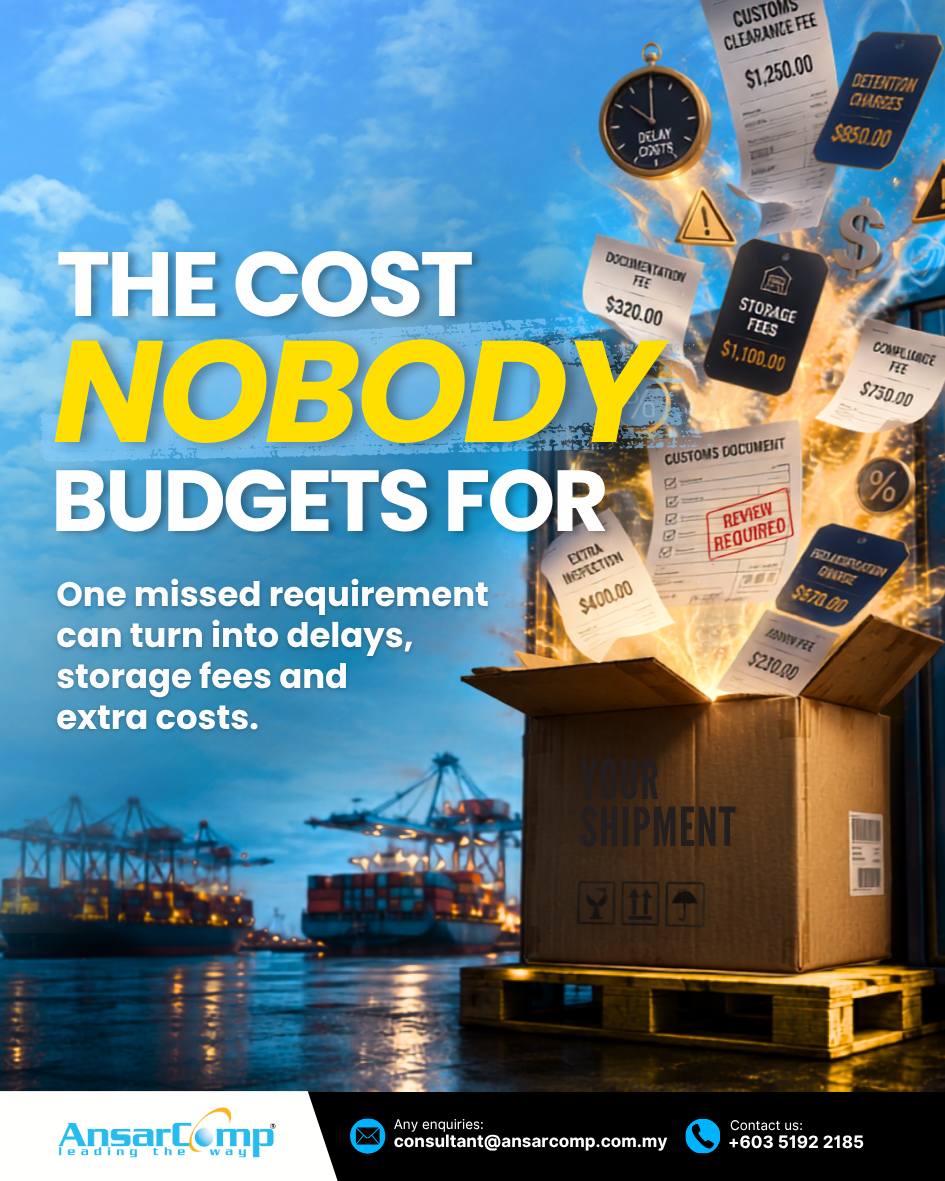
Some of the additional costs that may arise include:
✅ Storage charges due to shipment delays
✅ Amendment costs for documents or permits
✅ Additional inspection fees
✅ Delays in customs clearance
✅ Penalties due to non-compliance
✅ Extra operational costs caused by disrupted delivery schedules
What may seem like a small issue at the beginning can have a much bigger impact once the goods arrive at the port or point of entry in Malaysia.
The longer a shipment is delayed, the more likely the costs will continue to increase. In some cases, delays can also affect customer delivery timelines, project planning, business operations, and the overall supply chain.
That is why compliance planning should begin before the shipment is made, not after the goods have already arrived.
An early review of product classification, HS code, permits, certifications, import documents, and the requirements of the relevant authorities can help identify risks in advance. With the right preparation, many delays, amendments, and avoidable extra costs can be prevented.
At AnsarComp, we help companies understand their import requirements and regulatory pathway before goods are shipped into Malaysia. This allows businesses to plan their market entry more effectively, reduce compliance risks, and avoid unnecessary cost surprises.
Because in international trade, preventing one mistake before shipment is always better than paying for it after arrival.
Plan before you ship. Reduce the risk before it becomes a cost.