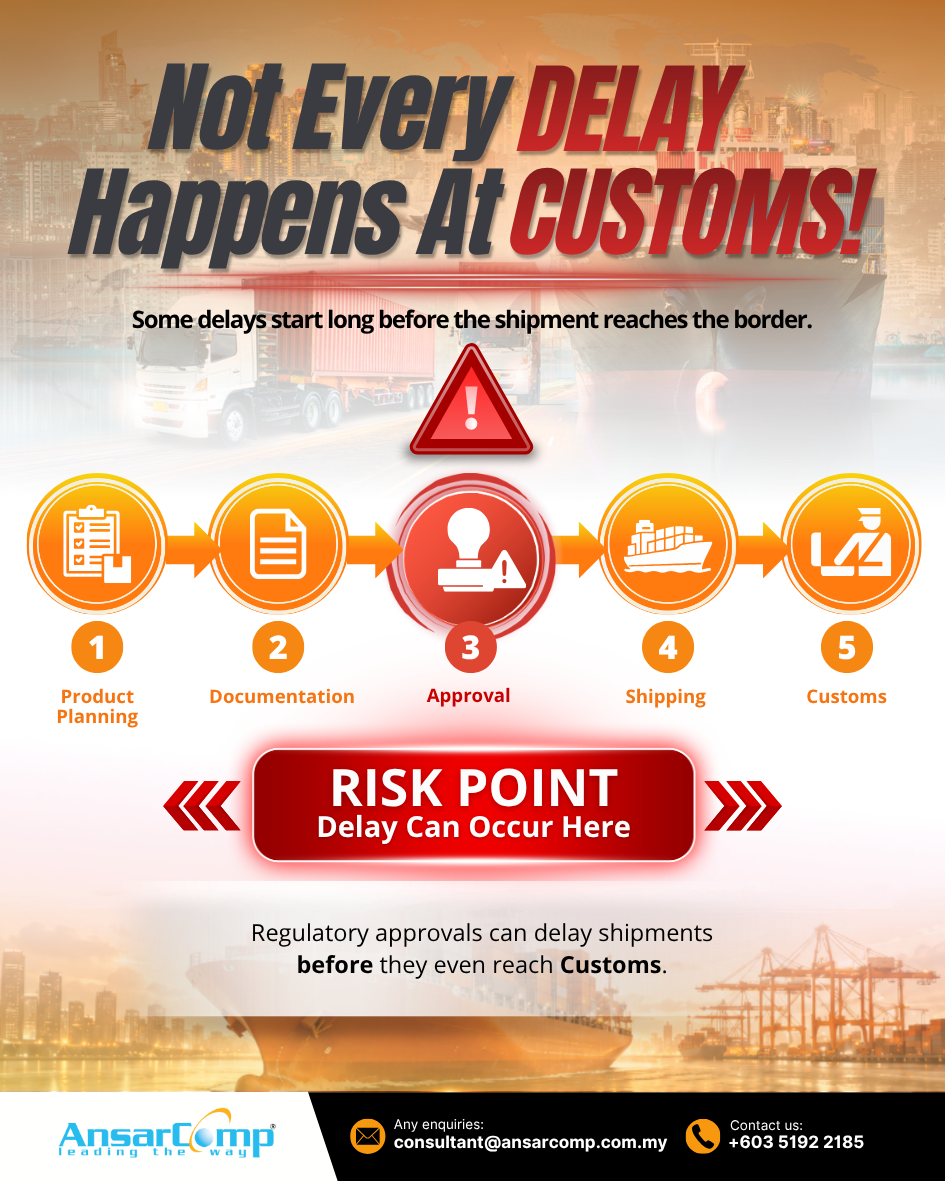
When shipment delays happen, many people immediately assume the problem starts at Customs. In reality, however, many delays begin much earlier — long before the shipment even reaches the border.
In the import process, every stage plays an important role. From product planning, documentation, and regulatory approval, to shipping and customs clearance, each step must be managed carefully to avoid unnecessary disruption.
Here are the key stages that should be given proper attention before a shipment is made:
1. Product Planning
The first step is understanding the product category, import requirements, and the relevant regulatory authorities involved before arranging the shipment.
2. Documentation
All required documents — such as invoices, packing lists, permits, certificates, and product information — must be complete and accurate.
3. Approval
Obtaining the necessary regulatory approvals before shipment is one of the most critical parts of the process. This is often the main risk point where delays can happen if approvals are not secured early.
4. Shipping
Shipping should only proceed once the required preparations and approvals are in place to reduce the risk of detention or clearance issues.
5. Customs
Customs clearance becomes much smoother when all earlier stages have been handled properly.
Delays at the approval stage can affect the entire supply chain. Shipments may be held up, extra costs may arise, and business operations may be disrupted.
That is why early planning is essential. By understanding regulatory requirements before the shipment moves, businesses can reduce compliance risks, avoid unnecessary delays, and keep their supply chain running smoothly.
At AnsarComp, we help businesses manage compliance requirements, regulatory approvals, and import support so shipments can move forward with greater confidence.
Plan ahead. Stay compliant. Ship with confidence.
📧 consultant@ansarcomp.com.my
📞 +603 5192 2185